How a product is disposed of at the end its life is a key element to its sustainability. A product may be ‘green’ if it is made from sustainably sourced materials, which may be recyclable or made from recycled materials, it may be made using renewable energy, and its manufacturing and supply chain process may be very efficient, but what happens when it comes to be disposed of?
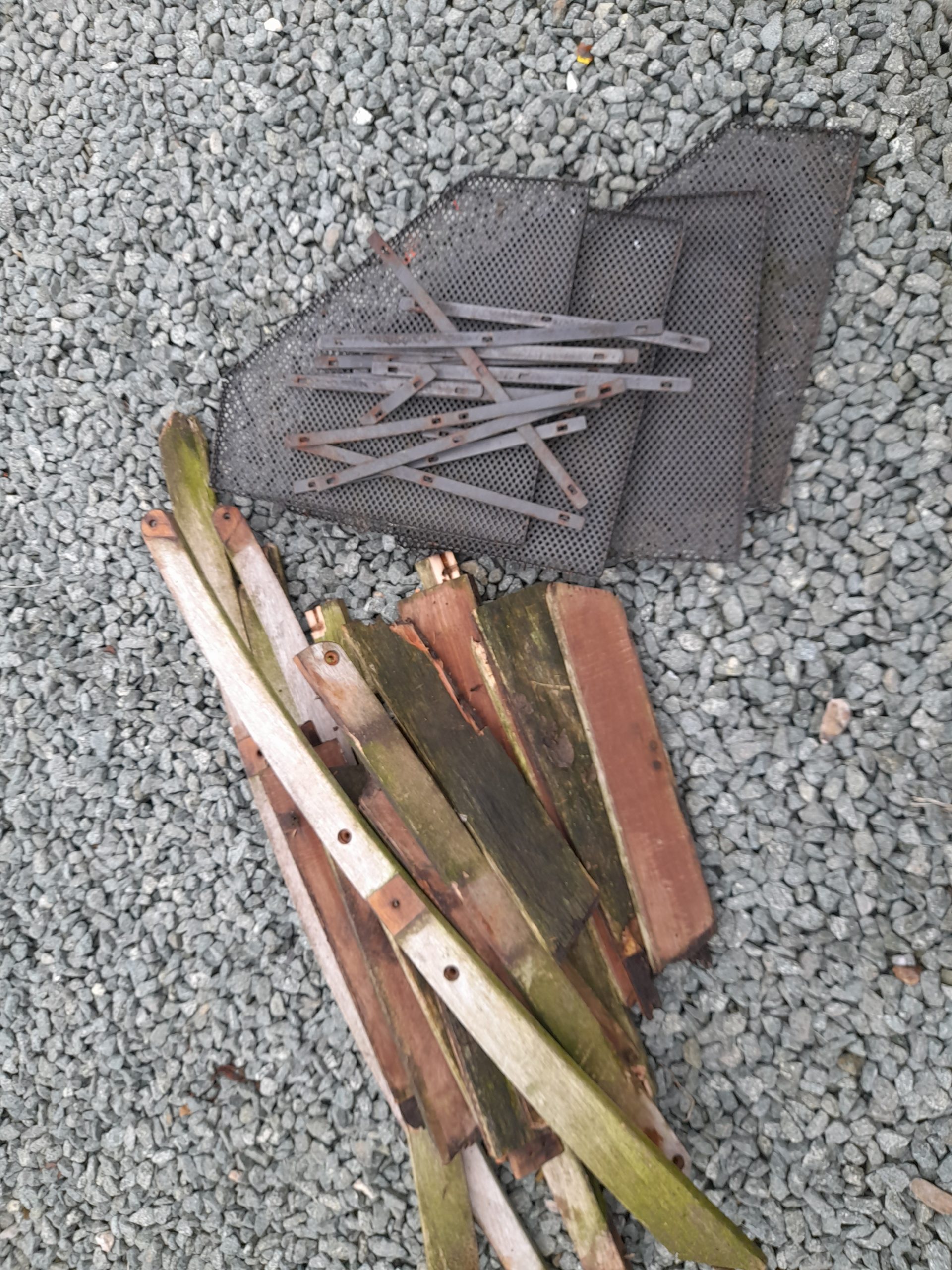
Take the simplest of products as an example. The pile of materials pictured was a garden chair, made from timber and steel components, both recycleable and in the case of the steel components, potentially made from recycled steel. So far so good, but what will the average consumer do with it at the end of its useful life? They’ll take it to their local recycling centre, and here’s where the conundrum begins – into which skip should they throw it? The ‘wood’ skip or the ‘metals’ skip? In this case, the centre staff will probably advise they put it in the ‘non-recyclable’ skip.
A few consumers might go to the trouble of deconstructing it, as in this case, so that the timber and the steel can be recycled separately, but we imagine that such consumers would be in the minority.
Clearly style, usability and production costs are the key considerations for product designers, and we’re not suggesting that consumer products should only be made from a single material, but how a product will be disposed of at the end of its life must be a consideration in making products sustainable. The consumer also has a responsibility to consider this when making purchasing choices. Together, product designers and consumers will drive sustainable product design.