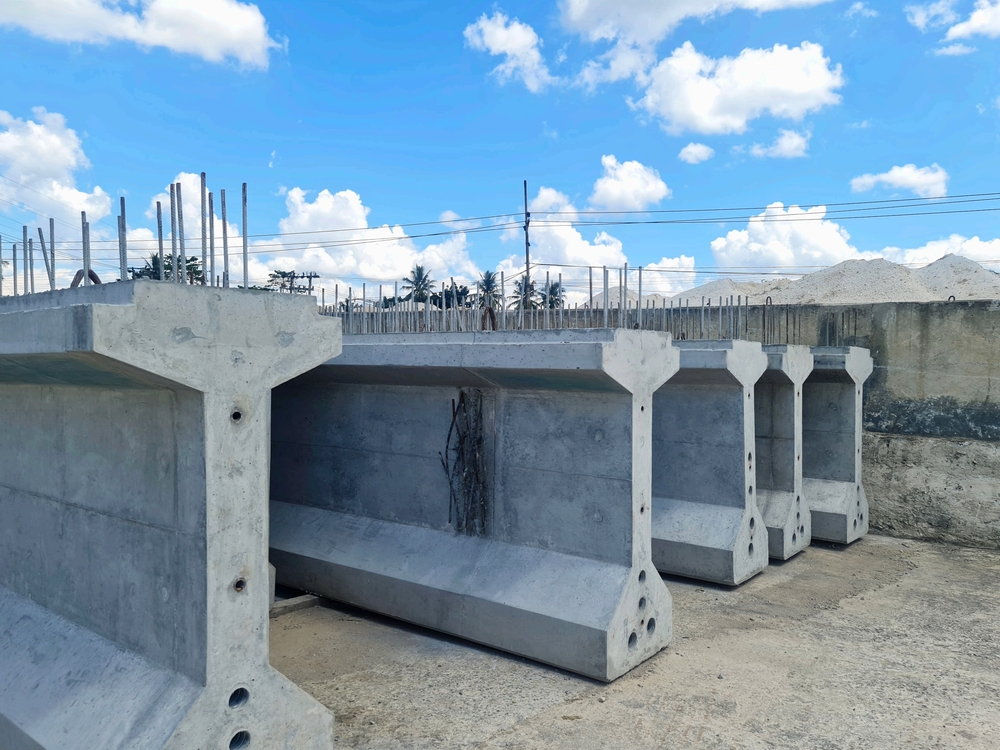
Cement is ubiquitous in the built environment, but its carbon footprint remains a major challenge for industrial decarbonization. Production accounts for roughly 8% of global carbon dioxide emissions, driven by both the fossil fuels used for high-temperature heat and the chemical breakdown of limestone.
Researchers at the University of British Columbia are testing a different approach. The team produced cement through an electrified process that lowered input energy demand by 70%. When recycled waste cement was used as the feedstock, the process reduced carbon dioxide emissions by 98% compared with conventional cement production.
For cement manufacturers, construction firms and infrastructure owners, the research is notable because it addresses emissions at the production stage rather than relying only on offsets, carbon capture or incremental efficiency gains.
Traditional cement production uses limestone, or calcium carbonate, combined with silica-containing minerals. These materials are heated to around 1,450 degrees Celsius, using natural gas, to produce cement clinker. That heat demand is energy intensive, and the limestone itself releases carbon dioxide as it breaks down.
The UBC process uses electricity to convert limestone and silica into a cement precursor through an electrochemical route operating at about 60 degrees Celsius. The material is then converted into belite in a kiln at about 650 degrees Celsius.
Belite-rich cement already has relevance for major infrastructure applications, including large structures such as dams. That matters for B2B buyers and asset owners looking for lower-carbon materials without moving away from cement-based construction altogether.
Waste Cement Could Become a Production Input
The biggest emissions cut came when the researchers replaced limestone with recycled waste cement. In that test, the process produced about 20 kilograms of carbon dioxide per tonne of cement. Conventional production methods produce roughly 800 kilograms per tonne.
That shift could change how the construction and cement sectors view demolition and waste streams. Instead of treating waste cement primarily as a disposal issue, the process points to a possible circular model where old cement becomes a feedstock for new production.
The electrochemical reactions also generated hydrogen. The researchers noted that this hydrogen could potentially help supply heat for the kiln stage, which could further reduce fossil fuel demand if the system is powered by low-carbon electricity.
Commercial deployment is still an open question. The University of British Columbia has filed an international patent application related to the process, and two of the study’s authors are co-founders of a company working to commercialize it. That suggests interest beyond the lab, but scale-up will depend on cost, feedstock availability, permitting, electricity supply and performance across different cement applications.
The study adds momentum to the broader push to electrify industrial processes that have historically depended on high-temperature combustion. For cement, the value proposition is clear but not yet proven at scale: lower process emissions, potential use of construction waste and a production pathway that targets the chemistry behind one of the world’s most carbon-intensive materials.