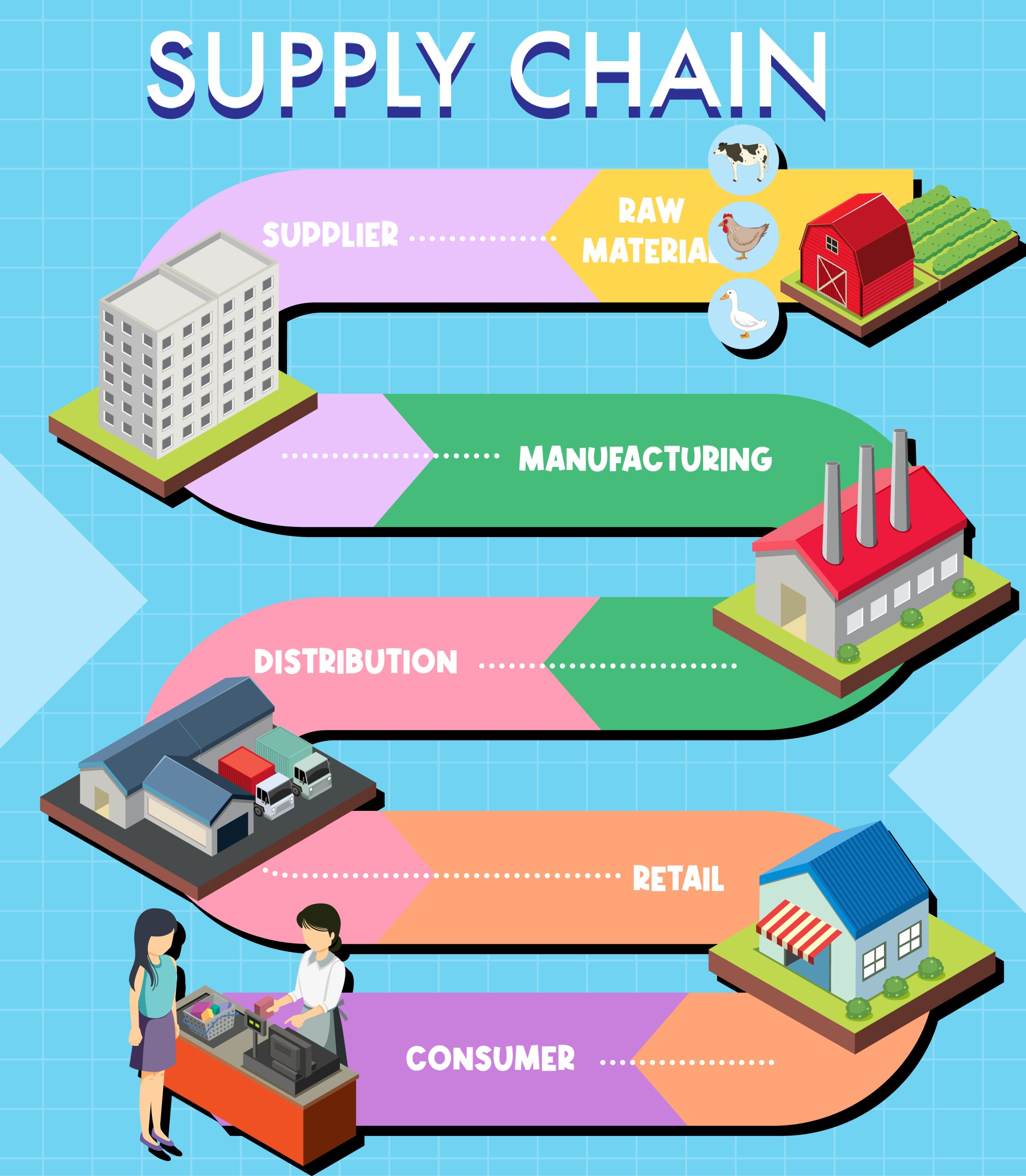
Everyone involved in carbon reporting will agree that measuring supply chain emissions (Scope 3) is fraught with challenge, and often ends with estimations, especially when that supply chain involves physical products. Supply chain emissions are the hardest to address for any business wishing to decarbonise, but frequently the largest area of emission. One would be forgiven for taking the view that because those emissions do not belong directly to the business, that it can’t take action on them, but that is a missed opportunity.
It is important to remember that your Scope 3 emissions are your suppliers’ Scope 1 and 2 emissions, and the chances are that they will be taking action on them.
When engaging with your supply chain on decarbonising, we suggest a stepped approach, that may be phased in over a period of several years.
- Ask your suppliers if they have Carbon Reduction plans and targets. This puts it on their agenda. Even better, do they have Environmental Product Declarations or Lifetime Carbon Assessments for the products they supply.
The aim here is to ascertain the carbon impact of their products or services. For example, if a company buys 100 tonnes of steel roll in a year, and their steel supplier has an EPD for that product, then that company will be able to calculate with a high degree of certainty, the carbon impact of that steel.
For a service provider, EPDs will not be relevant. However, if that service provider has annual carbon measurement in place, then the proportion of that overall carbon impact attributable to you may be pro-rated from the share of overall turnover your custom represents.
- Set a date by which the presence of a Carbon Reduction Plan and / or EPDs will become a mandatory ‘ticket to trade’ with you. That might be 2 or 3 year notice period. You might also consider setting a threshold – for suppliers with a trade in excess of £X for example.
- Implement mandatory Carbon Reporting on suppliers.
- Use comparative Carbon performance as a decision making metric, alongside quality, price, availability etc.
The most important thing to do is engage your suppliers in your decarbonising journey as soon as possible, and simply ask the question. We have examples where businesses have struggled with Scope 3 reporting, but never considered that their suppliers might already have the information they require.
Accurate Scope 3 reporting is a developing process and Scope 3 emissions are definitely an area where businesses can and should be taking action.