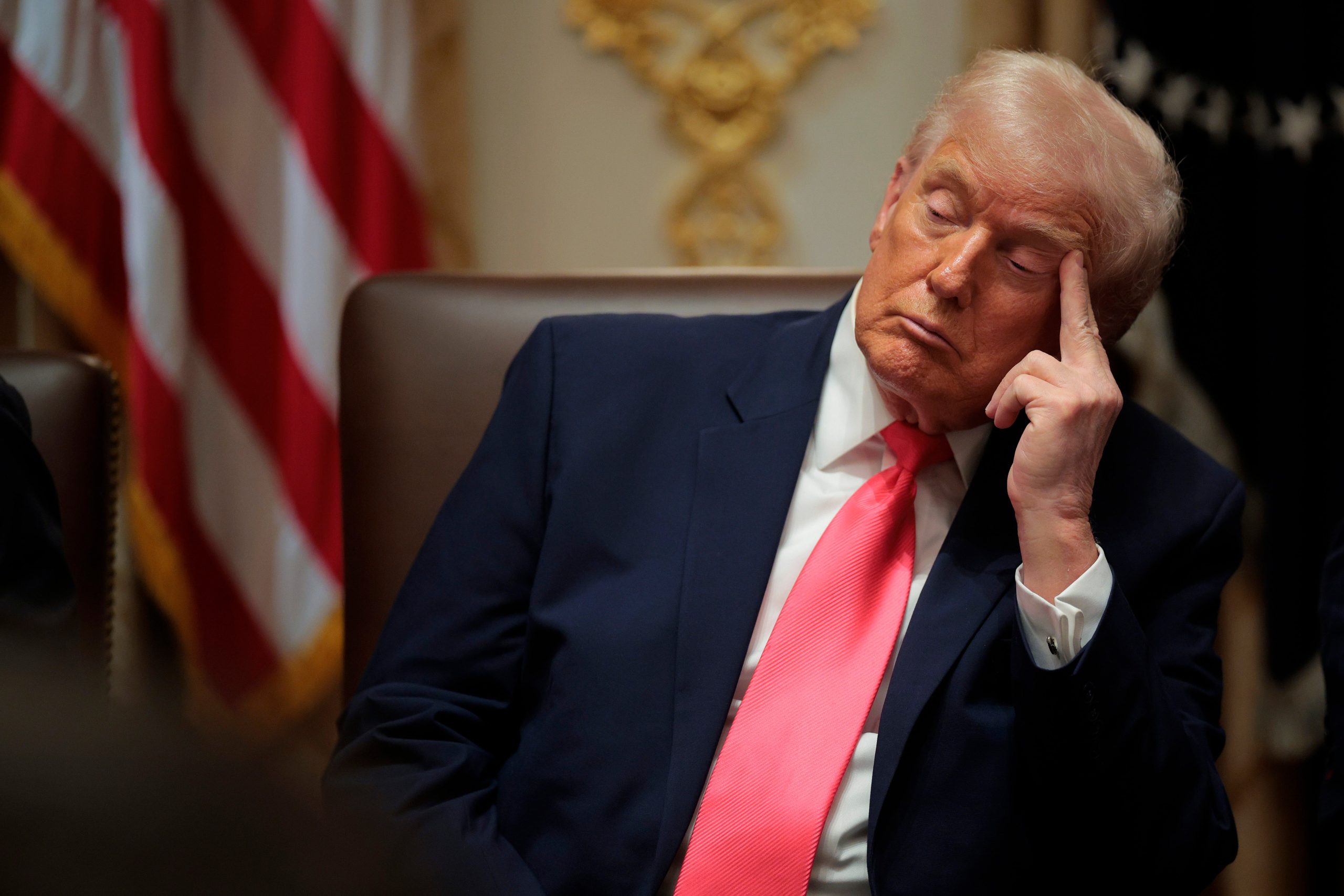
Headwinds for SMEs role in decarbonising?
The short answer is probably yes. Since Trump’s election in 2024, it has been harder to engage businesses in decarbonising and Net Zero. Speaking to a client recently, one who offers low carbon packaging solutions, he agrees. Some of his clients are reporting that it’s not the priority now that it has been.
‘Drill Baby, Drill’, the rise of the climate change denying right-wing populist movement and misinformation and disinformation around the cost of Net Zero and the climate crisis are pushing sustainability down the agenda. Certainly, there are other factors too affecting UK businesses – economic uncertainty, rising labour costs for example. But when world leaders openly dismiss climate change as a hoax, the rest of the world listens.
If we were to plot UK businesses on a scale, from ‘not at all interested in sustainability and never will be’, to ‘ very much actively engaged in sustainability and Net Zero’, the bulk of UK businesses I’m sure would sit in the middle of the spectrum. So how can we engage them? With facts?
We’ve all heard the excuses for inaction on the climate crisis. ‘What about the US and China?’, ‘Renewables are pushing up our energy costs’ and ‘we can’t afford Net Zero’ being the most common, so let’s examine these.
On the US – Trump is unwittingly presiding over a solar energy boom in his country. This is down to several factors. Partly the rapidly falling costs of solar panels (including those manufactured in the US) partly a rush to develop projects ahead of any attempted anti-renewables policies and partly the rush to develop data centres with low-cost energy supplies.
Industry projections are that renewables will make up 50% of electricity supplies in 46 of the 50 states by 2035.
On China – China has been installing solar capacity at the rate of 100 panels per second, a truly staggering statistic. China’s renewables generation has more than doubled between 2021 and 2024.
China is the world’s largest market for low-carbon energy investment. In 2024, the country attracted $818 billion in clean energy investments—more than the combined total of the U.S., the European Union, and the UK. This accounted for 66% of the global increase in clean energy investments that year.
On other countries
India is the world’s fourth largest producer of renewable energy, and yes, coal fired generation is falling.
Brazil generates 84% of it’s electricity from renewables. Historically large scale hydropower has dominated, but solar and wind are taking a rapidly increasing share.
Norway – 97% of new car sales are electric cars.
On ‘Renewables are pushing up our energy costs’. No, they’re not. Renewable energy is cheaper than fossil or nuclear generated power. In the UK though, the wholesale electricity price is set by the highest cost generator, usually gas. It’s a broken market model that does need to be reformed.
On ‘We can’t afford Net Zero’. This is the often repeated message from certain vocal UK politicians, who’d like us to believe that it is the taxpayer who’ll be paying the bill for Net Zero, whatever that means. That’s complete rubbish of course. The bulk of the investment in the energy transition is coming from private investment. Moreover, the cost of inaction on the climate would far outweigh the costs of the energy transition, and would still leave the UK reliant on imported fossil fuel.
The question remains – why should UK businesses be concerned about Net Zero and their role in it?
Our approach is to change what people do, not what they think. We can’t make all business owners care about the environment, but all business owners will care about their business.
Costs. Waste is a cost to business. Whether it is wasted energy or literally waste in the bin, it all costs.
Marketing advantage. A business which embraces sustainability and commitment to decarbonising can use this to differentiate itself form its competitors.
Access to markets. Many buyers are mandating carbon reporting and commitment to Net Zero for its value chain, including the major supermarkets, plcs in the UK and Europe, and the public sector.
Value. A business which has the lowest possible energy and waste costs, has the best performing building and the cost efficient process will be worth more when the time comes to sell.
People. Multiple studies, from the UK and abroad, agree the businesses which embrace and embed social and environmental best practice are more attractive places to work. Recruitment is easier, and retention is better.
Conclusion
Whatever the prevailing political winds, and whatever a persons’ views on pollution, for a business owner, acting on costs, efficiency, waste and marketing just makes good sense, whether it’s wrapped up as sustainability or not.